Showing posts with label Henry Melville. Show all posts
Wednesday, December 12, 2012
Santa with Muscles
By: Henry Melville
The Not-So Abby Normal Brain and Santa With Muscles
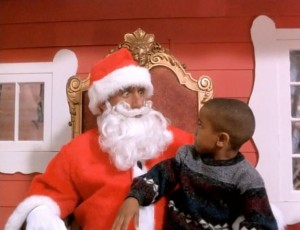
If a repetitious groundhog day allows time for cultivation of a plethora of existential and neighboring philosophies, then Hulk Hogan believing he’s Santa Clause undoubtedly narrows down the spectrum. “Absurdity of conventions” is a phrase that can extend beyond philosophical thinking and describe a film itself. A questionable man goes through an ordeal where he discovers the error of his ways and gains redemption in the end. Why does the formula continue to be used and capture the imagination of children and adults alike?
The answer extends deeper beyond the acting ability behind Hogan’s facial hair. Existentialism follows the method of thinking that “we and things in general exist, but that these things have no meaning (essence) for us except as we through acting upon them can create meaning." Hogan’s character, a self-involved millionaire, lives life according to a lengthy list of rules he’s designed for himself. It is the very convention of these rules that lands Hogan on his head and into an amnesia-driven journey through an orphanage believing he’s Santa Clause. Standard kid’s movie antics ensue and Hogan winds up remembering the millionaire he is and returning to his mansion, now dejected. A theistic existentialist believes that “recognizing and experiencing absurdity leads to possibility of various kinds of redemption." It is not the absurdity of becoming Santa (with muscles) that allows Hogan his redemption, but the absurdity of the rituals in his ordinary life. The meaning that Hogan creates for himself is within the fabric walls of the Santa suit, helping the orphans he has come across.
Thursday, August 23, 2012
Scattered Words of Film
Words by: Henry Melville
Compiled by: The Seafairy
Chronologically, in an unimportant chronological order
FOREIGN CORRESPONDENT (1940): What glorious sets! What beautiful camera movement! What elegant use of the close-up! What humor! The genius of his work is that he uses the very humor and thrills he is known for to undermine (and, in an odd way, accentuate) the themes. And oh boy does he tackle themes in this one. They may not all be entirely fleshed out as fully as in others, but here's a small sample of themes I noticed in order from most explored, to less: Identity, loss of innocence, solitude, alienation (sort of, it's not the word I'm looking for, but I can't seem to find the right one), doubling (A Hitchcockian staple). Not to mention the ubiquitous bird motifs. Clocking in at two hours, this of Hitchcock's filmography is constantly in motion and perfectly paced. A rather under-recognized of Hitchcock. Should be put right up there with THE 39 STEPS.
---
I apologetically love BATMAN FOREVER. Tommy Lee Jones and Jim Carrey are great. Val Kilmer is Val Kilmer. Nicole Kidman is pretty/ pretty adorable. The over-the-top style and art direction is only matched by the genuinely funny script and dialogue. This is the Batman movie I could watch over and over and would be my favorite if BATMAN RETURNS wasn't so freaking perfect.
---
---
In response to Criterion November 2012 new releases:
RASHOMON is pretty huge for Criterion, it's like getting a new Chaplin for Kurosawa fans.
Trilogy of Life - Just what we needed. More films from the guy that did SALO...
WEEKEND - YES, they've teased me with being able to buy the poster,
now I can freakin' get a copy. Geez. Love.
HEAVEN'S GATE - 216 minutes long. Worth it? An anti-western western? Sounds great.
End of response.
---
KOLCHAK: THE NIGHT STALKER is like the 70s version of Supernatural mixed with some good 'ol Don Knotts' THE GHOST AND MR. CHICKEN with a healthy dose of noir. Starring Darren McGavin, you can't go wrong.
---
I want to go back in time to 2005 when relatively no one was excited for a new Batman movie.
---
Normally when watching THE ROYAL TENENBAUMS, I connect with the Richie, Margot (and, more or less, Eli) storyline. Personally, the Chas/Royal relationship seem to fall into the cracks with my focus on the (arguably) more main characters. Stiller always seemed more over-the-top than his character's siblings so I felt this odd personal and emotional disconnect, but his portrayal of the character dealing with death (in light of recent events) really struck me.
---
---
---
HEAVEN'S GATE - 216 minutes long. Worth it? An anti-western western? Sounds great.
End of response.
---
KOLCHAK: THE NIGHT STALKER is like the 70s version of Supernatural mixed with some good 'ol Don Knotts' THE GHOST AND MR. CHICKEN with a healthy dose of noir. Starring Darren McGavin, you can't go wrong.
---
I want to go back in time to 2005 when relatively no one was excited for a new Batman movie.
---
Normally when watching THE ROYAL TENENBAUMS, I connect with the Richie, Margot (and, more or less, Eli) storyline. Personally, the Chas/Royal relationship seem to fall into the cracks with my focus on the (arguably) more main characters. Stiller always seemed more over-the-top than his character's siblings so I felt this odd personal and emotional disconnect, but his portrayal of the character dealing with death (in light of recent events) really struck me.
"I've had a rough year, Dad." Nothing immediately comes to mind that so encapsulates a single, emotional, profound moment in a character's life that's played so subtly and without intense focus. It's almost a throw away line that isn't lingered on, yet the lingering feeling it causes is immense.
Oh Wes, we love you!
---
Hitchcock's SABOTAGE (1936) is incredibly, shockingly, disturbingly grim. As far as I'm concerned, this employs Hitchcock's greatest use of close-ups and camera movement (not to mention special effects) in his British films. He's famous for mixing humor with suspense, but when he utilizes humor first then all-out horrific suspense, it is heightened ten times over. Then you realize the movie is just entering the third act.
Side note: I take for granted watching 30s Hitchcock via Criterion transfers. The DVD I received...well, I suppose it wasn't the worst visual transfer I've ever seen, but the audio is horrendous. Muffled mumbles on top of poorly balanced score/dialogue tracks made the film a chore to follow (totally worth it, but it shouldn't have been so impossible).
---
Hitchcock's SECRET AGENT (1936) is unrelentingly grim. Still experimenting with sound elements, some sequences stand out against the others (such as the church scene and the first murder scene [one of the finer in Hitchcock's early British films]). The character of Elsa Carrington is an amazing Hitchcock female dealing with her innocence and fetishization of sex and death in relation to each other.
Her character flips when the innocence is lost in a superbly subtle, yet oddly obvious character development. While SECRET AGENT may not be the best early Hitchcock, or the easiest to swallow and get through (correlation: THE WRONG MAN), it is essential to the development of Hitchcock's style and an introduction to themes he would be exploring for the rest of his fifty year career.
---
Alfred Hitchcock's MURDER! (1930) is like watching a artist first come into his craft. Experimenting with audio (the first film to have a person's thoughts in the soundtrack of a film) and economizing every camera movement and edit. While the story is a slow-burn and drags at bits (if not paying attention to the brilliant camerawork), it's a great example of how Hitchcock deals with (and later deals with a lot more) this idea of "real vs. appearance" in regards to the actions on screen and how the film exists in reality. You don't need to take film classes when you can just watch Hitchcock all day/ everyday to possibly learn more than any professor can ever teach you.
---
THE LADY EVE. Every aspect of this movie is ridiculous except the chemistry between Stanwyck (pre-feminist movement awesomeness found in this role) and (a very young) Fonda, making it somehow all meld together into a highly re-watchable, fun; funny film.
---
Maybe it's because of the mood I'm in, the time of night, or possibly just the haunting score and shot, but the ending of Solaris has creeped me out to the very core. Chills don't even begin...
---
After watching Hitchcock's THE LADY VANISHES, I remembered something about movies that needs to be recognized more often: Stop taking your craft so seriously when it doesn't have to be. Hitchcock's work is cinematic genius, everyone agrees, and his movies always have a tinge of humor and a certain sprezzatura about them. THE LADY VANISHES is one of the most fun psychological thrillers while still maintaining the suspense and mystery of any other thriller. So, Chris Nolan, there's no need to make a, and I emphasize strongly on the absurdity of the word, BATMAN movie that isn't fun. You're not directing THE GODFATHER (which also has this element of fun that's serious), it's BATMAN.
End
Wednesday, August 22, 2012
Scattered Images of Film
Images By: Henry Melville


Compiled By: The Seafairy
Chronologically, in an unimportant chronological order
Where is it that we were together? Who were you that I lived with? The brother. The friend. Darkness, light. Strife and love. Are they the workings of one mind? The features of the same face? Oh, my soul. Let me be in you now. Look out through my eyes. Look out at the things you made. All things shining.
You cannot have it both ways. A dancer who relies upon the doubtful comforts of human love can never be a great dancer. Never.
I still think it would be wonderful to have a man love you so much he'd kill for you.
Why do you have this?
I must get this crack mended.
You know what frightens me about the human body?
"What?"
Well, it's like the, er, most sophisticated mechanism in the entire universe, and yet it's so fuckin' quiet, isn't it? Know what I mean?
"Dunno. Mine makes enough noise."
It's like this, er, wet, pink factory. What the fuck are they makin' in there? I mean, what's the product? You never see no delivery trucks comin' and goin', do you?
"What?"
Well, it's like the, er, most sophisticated mechanism in the entire universe, and yet it's so fuckin' quiet, isn't it? Know what I mean?
"Dunno. Mine makes enough noise."
It's like this, er, wet, pink factory. What the fuck are they makin' in there? I mean, what's the product? You never see no delivery trucks comin' and goin', do you?
Forgot how great this was.
End
Sunday, August 19, 2012
In Defense: MAGIC MIKE
By: Henry Melville
*There are definite spoilers in this, so, don't read it if you haven't seen the movie. Also, all quotes are paraphrased; they are far from perfect.
Sex, Drugs & Stripping
Superficial, adj. 1. Shallow; not profound or thorough.
2. insubstantial or insignificant.
3. of or pertaining to the surface.
One of my coworkers, Breanna, who saw Magic Mike called it "superficial" and said she didn't like it because it was "just sex and drugs." My ears echoed with the word "just." If I had only seen the trailers for Magic Mike, I'd be inclined to agree with her, but I saw the movie because I wanted to know how Steven Soderbergh fit into it all. After seeing it (and how incredulously well directed, acted, edited, shot, etc. it was), I decided it was the best movie I've seen this year. Some would say that's more shocking than a girl not enjoying hot man-ass and muscles.
To be sure I wasn't about to make a jerk out of myself by writing this, I asked Breanna to clarify if she thought it was a bad movie, or if she just didn't like it. Her answer is made clear in the fact that I am actually writing this.
I'm not exactly sure were to start though. The only reason she gave me was the one about superficiality, so I guess I can prove that she's dead wrong in that regard. It's not an opinion. Superficial is simply what defines all the people who saw the movie for Channing Tatum's looks and male stripping. And like I've said before, Magic Mike trailers tricked 30 year old desperate housewives into watching a movie with actual content, not just sex and hunks.
"Just sex and drugs" means that all sense of character is irrelevant to the story or only serves as a means to get to the sex and drugs. So there must be no character development in Magic Mike, right? Wrong again, Breanna. Look at the titular character Magic Mike. Other than being acted with an extreme nuance that is unexpected from the guy who starred inThe Vow, the character development is dealt with an equal subtlety that initially caught me off guard. The first time we see Mike, he's getting out of bed after a night with two girls, Joanna and...Penelope!(?). Our first reaction to the character is that he's "a player" and, in a way, immature. Mike gives his "stripper wisdom," to Adam's sister and why Adam would choose to stay a male stripper: "He's 19. There's money, girls and a good time." Joanna serves as Mike's "good time" while he puts on this facade of being beyond that stage in his life. The reason Mike can't get his furniture business of the ground or quit his stripper job is because he actually doesn't want to. Adam "The Kid" shows Mike in three months how he's been acting since he started stripping. The immaturity, the stupidity, the bad decisions, all of it. The last we see of Joanna, she is right on the doorstep of becoming a psychiatrist and she's engaged. Mike is exactly in the same position as he was.
His realization of this occurs after losing his money to Tobias' "friends," almost getting Adam killed and confronting Brooke about it all. Tatum stutters his way through that scene brilliantly. I don't think I've seen a better example of a character figuring himself out out-loud before. "I'm not my lifestyle...It is what I do but, it's not who I am." When Brooke retorts, "The question isn't whether I believe it, but do you?" She isn't talking about his financial plans to go to Miami to get the funds to kickstart his furniture business, she's questioning him about his lifestyle. After all, it was only the night before that he and Adam "got fucked up." So, I suppose, it's just insignificant that Mike puts an end to his stripping and doesn't go to Miami? That's just sex and drugs, yeah?
And Matthew McConaughey's caricature (reminiscent of Frank TJ Mackey in Magnolia) of a prideful, self-idolizing, washed up stripper is just sex. The detail to the character's surroundings is worth mentioning. The self-portraits and sculpting, the constant use of chalices instead of regular cups, the showing off of rich furniture and clothing, his only strip-tease in the movie sums up the character. The way he begs and absorbs the attention ("You have to believe you are inside every last one of them.") "You are their liberation." Dallas does believe this. "You thinking about biting the hand that feeds ya?" But it's not enough that he's just prideful, he also represents, in a perverted way, a father figure to these strippers. He's their employer, but he works out with them, he gives them opportunity, he watches out for them (when they don't get in the way of watching out for himself). His excitement about Miami isn't just for himself. "Tarzan, step out of the dark and into the light." Why give such depth to a character if he's just there to look good and hire more guy-candy?
I could go in-depth about each character and how they absolutely don't fit into this view of the movie as "superficial," but I've already spent enough time explaining just one lead and one supporting character. I will (try to) briefly show the craft with which the movie was constructed to prove it's more than "sex and drugs" and how it doesn't fit the definition of "not thorough." (I'm currently writing a piece for a blog about the rave scene in Magic Mike, so that scene will be discussed ad naseum later). Sometimes metaphors are so blatantly obvious that they are inexplicably missed. Take for example that spectacular shot where Adam gets an insinuated blowjob from the birthday girl and Mike makes out with her friend. The shot isn't as simple as it appears. The shot's a (seemingly) single tilting shot starting from above Adam's head, traveling past the girl on her knees, past their shoes on the floor, to a red, snake-like counter design to an upside shot of Mike making out. Like I said, the symbolism can easily be as obvious as this: introducing Adam into this decadent world of male stripping ("Welcome to the crazy club")...wait for it...turns Mike's world on its head. But no, never mind, this movie is just sex and drugs, there's no symbolism that relates to character development.
On a particularly lonely night for Mike, he's sitting alone in his living room (shown by a great use of an unfocused-to-focused shot of Mike slowly falling back into his couch) listening to the waves outside his house. In his loneliness, he calls Joanna. We see him scroll this his numerous contacts (some with last names, some just first, distinguishing closer friends with acquaintances and other, less intimate contacts) we hear the waves crashing. He lands on Joanna's name and presses send. Cut to Joanna laying on top of Mike (shot vertically instead of horizontally symbolizing how Joanna's presence has Mike pushed up against a metaphoric wall) as the sounds of the waves are continuous. Why didn't the sounds of the waves cut? Do they serve as this underlying, constant in Mike's life? ("The dream is to wake up on the beach and make things.") These questions shouldn't exist in a movie lacking profundity or significance.
If this movie was "just sex and drugs," just "superficial," then I would not have been able to write nearly as much (and I can write a considerable amount more) as I have and will (see: Rave scene analysis for The Seafarers blog). Movies like Project X or Hot Tub Time Machineare "just sex and drugs", superficial. Intent plays a large role in it all. The fact that Magic Mike showed the male stripping industry in a nonjudgmental but honest way already puts the film light years above movies that glorify sex and drugs. Then again, what do I know. I guess Magic Mike is "just" about hot dudes and their hot dongs. ("Ladies, for the last time, give it up for the cock rocking kings of Tampa!")
Thorough, adj. 1. Extremely attentive to accuracy and detail,
2. Executed without negligence or omissions.
3. Having full command or mastery of an art, talent.
Genuine , adj. 1. Free from pretense, affectation, or hypocrisy.
Saturday, June 16, 2012
Suspended
By: Henry Melville
Simply put: Stop using the word “suspenseful” to describe 99% of horror movies.
Take for example, that generic horror movie coming out this month (regardless of when this is being read) about either possession, a haunting, or a psychopathic killer which may or may not involve a “creepy” child. Without fail, that movie will contain the following scene:
The movie’s heroine walks down a narrow hall or alley as the camera slowly pans away from the wall and begins to turn and hint at what’s waiting for her in the upcoming corner. An eerie, ambient note is heard under the heavy breathing and footsteps of the sweaty, promiscuously-clad actress. As soon as she hesitates to turn the corner, all noise stops (yes, even the footsteps as she keeps walking).
One beat.
Loud noise. This is accompanied by one of two things. One, the villain, ghost, or horror that the movie is centered on appearing behind that dark corner, or, two, something that causes the girl (and audience) to jump, breathe a sigh of relief and then:
One beat.
Loud noise. Then the horror of the movie comes from behind them or anywhere else “unexpected.”
This is not suspense. Suspense isn’t not knowing what’s around the corner, but knowing what is and not being able to stop it. The irrefutable master of suspense, Alfred Hitchcock, gained that title because of one of the most iconic scenes in cinema history: the Psycho shower scene. In the hands of a lesser director, or screenwriter even, the audience would be unaware of the silhouetted knife inching closer to the curtain. Janet Leigh would be gleefully bathing until she heard a noise. Her smile would drop and her head would turn. Hesitantly she’d return to her shower head, a little more on edge than before.
One beat.
Loud noise followed by the knife entering the curtain. This is not successful suspense. It is a shock. It’s startling, but not suspenseful. The reason I haven’t been able to close my eyes for more than thirty seconds in the shower isn’t because of a jump-scare I was given as a kid, but, as a kid, I endured the long, horrific, suspenseful shower scene and could do nothing to stop what I knew was coming. If the first was true, I would be afraid of laundry hampers because of the time my brother hid in one and scared me.
Don’t call a movie scary because it made you jump out of your seat. That’s simply human nature to react to a loud noise, there is nothing psychological to it. Being afraid to look out your window for fear of seeing Michael Meyers across the street, that’s scary. A horror films “longevity” should be judged differently than other genres. It is more than, “does this film hold up.” The film should have a vice-like grip of fear over you long after the credits roll. The annual Halloween viewing of Halloween proves this to me as I walk to my car, feel my heart pound more erratically than normal, and walk faster. I'm not afraid of not knowing what's in my backseat, but knowing that he's back there…waiting…while I sit in the driver seat anyway.
One beat.
Two beats.
Three beats.
I turn the keys in the ignition and prepare for the sleepless night.
Saturday, February 4, 2012
I Just Wasn't Made For These Times
By: Henry Melville
American International Pictures (lead by the one and only uber-producer Roger Corman) defined the short-lived beach party genre with the 1963 release of Beach Party. The genre was washed out by 1965 with the release of the seventh and last straight-forward beach party film, How to Stuff a Wild Bikini. Recently I’ve managed to track down these seven beach party classics and realized the state that the modern comedy is in today. Before I get to that, I’d like to briefly address why the beach party genre is the pinnacle of teen comedies.
Nostalgia is defined as a wistful or excessive yearning for a return to an irrecoverable past or condition. So it is not a personal nostalgia that these movies have such a hold over me because, I feel, it’s impossible for me to feel nostalgic for a time I’ve never experienced. I can’t miss something I've never had.
Is it the aesthetic of a film lost to technology? The magic of Technicolor and wonder of rear screen projection? Partially, yes, it is. The world stands out from reality and creates an unbelievably warm and perfect slice of Americana. In that sense, we all do yearn for the impossible perfection of a replaced, forgotten style. The polka dot, one-piece bathing suits explode, pop. Where’s the wonder, the mystery, the classiness of the now expected, obligatory nudity in a teen comedy? We have become desensitized. Our definition of standard, of normal has changed to the point that what was once attractive and sensual in the 60s is innocent. The attraction, the sexuality still exists, if one’s standards aren’t modern.
Perhaps it’s the innocence of the time that makes the beach party films stand alone in teen comedies. However, the film is chock-full of innuendo and suggestive elements. When did the change occur that took us from playful insinuation to shock-for-shock’s-sake explicitness? In the films, we don’t get Zack Galifianakis getting a blowjob or Seth Rogen making out with a vomit covered Anna Farris. Instead, we get a teen making out with two girls off-screen and returning covered in lipstick. We get Annette Funicello singing about waiting until marriage to the comically bereft Frankie Avalon. A girl knocking guys off their feet with the invisible and unexplained power of her thrusting hips. The cameos were of Vincent Price, Bela Lugosi, not Ron Jeremy or Hugh Hefner. The villains were Beatle’s parodies and the aloof, harmless biker gang, the Rats, led by even more aloof and harmless Eric Von Zipper. Not a flasher, naked Asian man or someone trying to bang the girlfriend. When did male nudity overtake prop gags and double entendres as “comedy gold”?
Don’t overlook the classic comedies because you think they’re not funny or boring. They’re teens dancing to Dick Dale and the Del Tones, maybe you’re boring. It’s Frankie Avalon using helium in his ski suit to win a ski jump competition for his girl, maybe you’re not funny.
AIP revealed their strategy for teen exploitation films called “The Peter Pan Syndrome”:
“a) a younger child will watch anything an older child will watch;
b) an older child will not watch anything a younger child will watch;
c) a girl will watch anything a boy will watch
d) a boy will not watch anything a girl will watch;
therefore-to catch your greatest audience you zero in on the 19-year old male”
The formula hasn’t changed.
Friday, September 2, 2011
The Lesser Knowns: Lost in the Fog
By: Henry Melville
A limpid fog … exists … outside your car windows. Up ahead you make out a fork in the road. On the right you see a glow of light that reads “vacancy.” Above that reads Bates Motel. You turn left. A sign reads “Welcome to Whitewood,” you pass a church and stumble upon The Raven’s Inn. And as luck has it, there is one more vacancy left just for you. Preparing for bed, you open the bedside drawer and discover an impaled crow. You hear music, chanting, coming from under the floorboards. Today is Candlemas Eve. The holiday of the witches.
What makes Psycho a near perfect movie is the craft, skill, and intelligence that went into making the film. It's Hitchcock, but it isn't a classic horror. What Horror Hotel lacked in symbolism, Psycho lacked in atmosphere. Satan’s on earth and he lives in Whitewood, the only evil in Bates Motel is Norman. Black shrouds, gothic architecture, graveyards, Christopher Lee, crypts. Horror cliché’s stem from this hardly known nightmare.
So next time you turn around an old lady on a chair, don’t expect Mother. It might just be the burnt corpse of a hundred year old witch looking for her next sacrifice. As for me, I’ll be expecting Vera Miles.
Psycho came out August 25th 1960. Audiences everywhere were shocked when their heroine was slaughtered in the first thirty minutes. What next? Where was Hitchcock taking them? The reaction to Psycho, like a tidal wave, crashed on the shores and destroyed beach houses. Less than one month later, September 12th 1960, Horror Hotel does not shock or horrify when the heroine is brutally sacrificed in the first thirty minutes of the film. What next? “Who cares, I’ve already seen this in Psycho, let’s just leave this rip-off movie.” Oh, but if they had stayed! Burning witches, satanic rituals, ghosts, animal sacrifices. All done in a pitch-perfect horror film style. And what rip-off could this film be? Production on Horror Hotel started before Psycho. How the two films can have such eerily similar elements and even shot for shot, identical scenes is beyond me. Perhaps, beyond this world.
Censorship! Psycho came under controversy for its showing of an unmarried man and woman sharing a bed, dressed and for showing blood. Let me remind you that witches are burnt, engulfed in flames alive, in Horror Hotel. If that was not shot down by the conservative 1960s “man,” what could be? Three lines. The censors cut three lines. Language? Not exactly. "I have made my pact with thee O Lucifer! Hear Me, Hear Me! I will do thy bidding for all eternity. For all eternity shall I practice the ritual of Black Mass. For all eternity shall I sacrifice unto thee. I give thee my soul, take me into thy service." A witch screams this as she is being burned alive, flames overtaking the scene. 1960 was not ready for this, but they were ready for Psycho.
Psycho can be found on any “Top 100” list related to films. Psycho was given a blu-ray release on it’s 50th anniversary. Horror Hotel can be found at your local Walmart cheap DVD bin, or the whole movie can be seen on Youtube.
Wednesday, August 10, 2011
The Lesser-Knowns: Overshadowed
In the shadow of a lesser giant there skulks a creature. No longer a man, this specter roams the ethereal realms surrounded by transvestites, aliens, crippled doctors and Susan Sarandon’s underwear.
It was only one year earlier, this phantom took refuge in The Paradise, the embodiment of pop music. Hub of what was new, what was in. In droves the sheep entered The Paradise with the promise of a killer show. Only one man could provide the entertainment they slutted for: Swan. The face of Death Records. The man behind the man behind the man of the nostalgia revival. Birthing the doo-wop Juicy Fruits and beach-bash Beach Bums. But what creates nostalgia? Time, vague memories, a phantom of the reminiscence? Yes, a Phantom! One does not find this phantom on rainy nights. Not within the walls of mysterious castles with hunchback handymen. No, it is found within The Paradise. Haunting those who stole his face, his voice, his love, his music. Revenge driven by passion, passion driven by soul, soul sold to the devil himself.
Phantom - a person or thing of merely illusory power. This is the obfuscated life, death and rebirth of Winslow Leach. A person of legend, of myth. Why, then, have few heard of his tragedy? Because they are blinded by Brad and Janet! Deafened by Dr. Frank-N-Furter! The beauty. The irreverence. The horror. The comedy. Passed by, forgotten, a tape compiling dust in a pawn shop. Eclipsed by the shock value of a truly rocky, mildly horrific picture show.
Constantly settling for what is popular, such is the grave nature of man. The reason time has forgotten Phantom of the Paradise. A film as deserving a cult following as that other sci-fi-horror-rock-comedy-musical. “He sold his soul for rock n’ roll” and all you have to do is watch.
Brian De Palma’s Phantom of the Paradise was released in 1974. It was all but forgotten when The Rocky Horror Picture Show snowballed it’s way into midnight showings across the nation in 1975. Fox’s Glee aired it’s Rocky Horror Picture Show themed episode in 2010. As of now, Phantom of the Paradise is up for consideration to be included in the Criterion Collection.
Subscribe to:
Posts (Atom)

